News article
The Heritage Act Pipeline Problem: How Tribute Bands Are Filling the Touring Gap
Published May 29, 2026 by Music Zirconia Editorial.
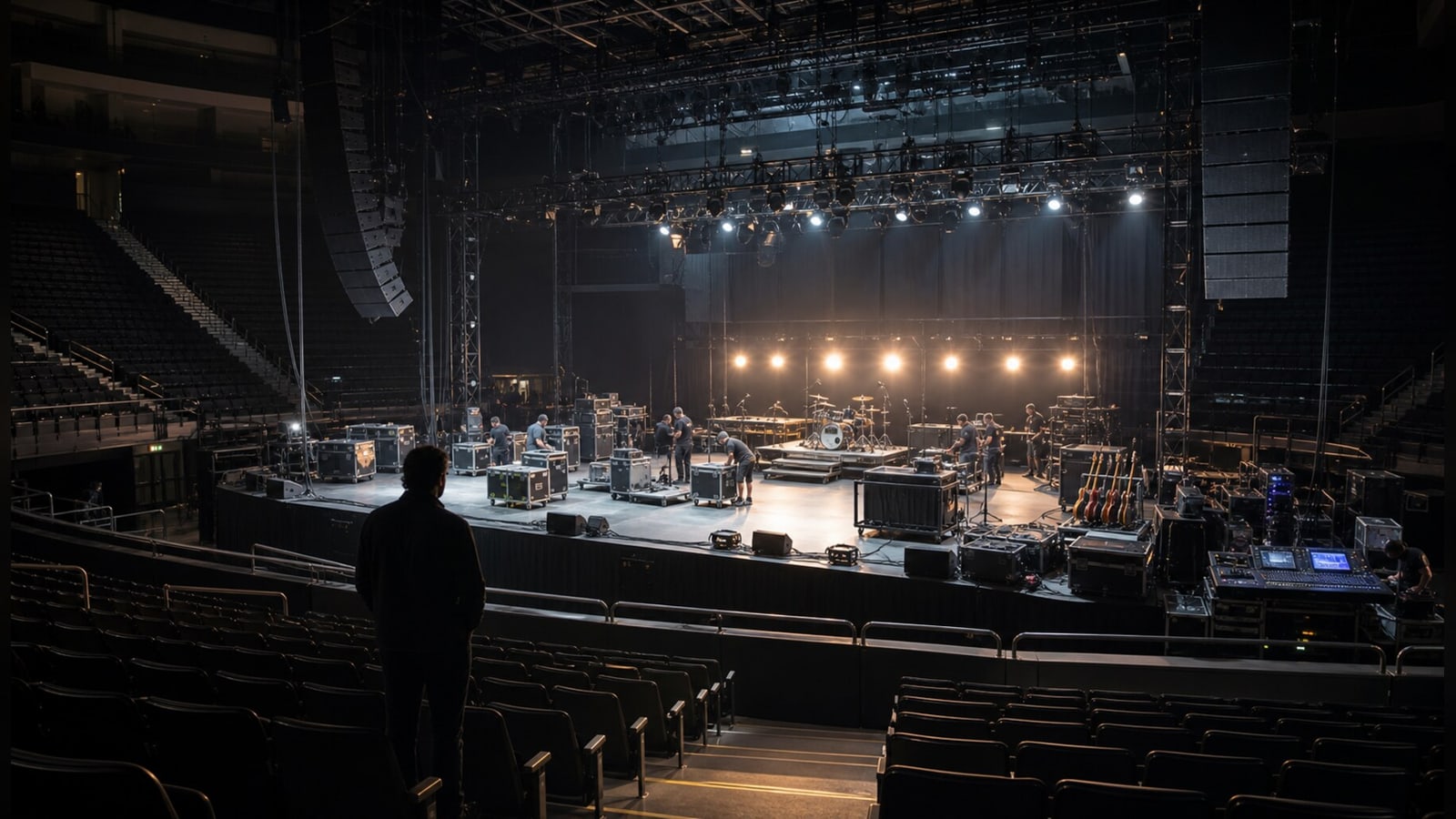
As Boomer-era headliners retire from touring, U.S. venues face a $1B+ programming gap. Tribute acts are quietly absorbing that demand and reshaping the live-music calendar.
No media, footage, audio, or performances by the original artists named in this article appear here. The acts referenced from the Music Zirconia and Premier Tributes rosters are independent tribute acts.
The math the touring industry hasn't said out loud
In 2018, three of the biggest grossing acts in concert history (Elton John, Neil Diamond, and Rush) announced retirements or farewell tours within a single week. Elton John completed his Farewell Yellow Brick Road run in 2023 after more than 4,000 concerts across 80 countries. Billy Joel ended his decade-long Madison Square Garden residency in 2024. Of Pollstar's most recent 100 top-grossing tours, 23 are headlined by artists 65 or older, and 6 of the top 25 are at retirement age.
That is the headline. Here is the consequence that most of the industry hasn't fully priced in: the largest scheduled rotation of headliners in modern touring history is now underway, and the economic hole those artists are leaving is being filled, night by night, by the tribute economy.
The Heritage Act Pipeline Problem is not a question of whether legacy headliners are coming off the road. They already are. The question is what programs into the calendar slots they used to occupy, and the answer increasingly lives on the roster of agencies like Music Zirconia and Premier Tributes.
The numbers behind the gap
Three data points define the shape of the pipeline problem:
1. The U.S. live-music market is growing while headliner supply shrinks.
The U.S. live music market is projected to grow from $19.7 billion in 2026 to $26.93 billion by 2031 (CAGR 6.45%). The roster of artists capable of headlining a 5,000 to 20,000-seat venue is contracting at the same time demand is expanding. Talent managers have publicly warned that "as these boomer rock and roll artists are passing and retiring and disappearing, I don't see anything that's going to take their place musically." (Rolling Stone analysis)
2. Tribute attendance is already at scale.
Tribute bands now sell approximately 1.7 million tickets annually in the United States alone, with merchandise spend averaging $7.70 per attendee. Tribute acts are routinely booked at $5,000 to $10,000 per show in clubs and theaters and $10,000 to $50,000+ at casinos and PACs. That pricing puts them squarely in the booking budget previously allocated to mid-tier original acts.
3. The supply side has matured.
Music Zirconia represents 1,750+ curated tribute acts across every era and genre. Premier Tributes, the agency's premium tier, focuses on tribute acts capable of headlining the same theaters, PACs, and amphitheaters once owned by the legacy artists they honor. The roster includes acts like Queen Nation, Back in Black, Britain's Finest, Bee Gee Gold, Wallen Nation, and Prince Again. Each performs the catalog of an artist no longer actively touring, retired, or no longer with us.
Why tribute acts are the structural answer
For talent buyers asking the obvious follow-up (why tributes specifically, instead of emerging original acts?), the answer comes in three parts.
The catalog is already loved.
A tribute act sells tickets on the strength of a catalog with decades of audience equity. An emerging original act needs to build that equity from zero, a process that for the heritage-act gap would take 20 to 30 years. Tribute acts give buyers immediate access to the catalog that already fills the room.
The price-to-draw ratio is unmatched.
A heritage-act original at the end of touring availability costs $1M+ to put on a single arena stage. A flagship tribute act delivering the same setlist costs 5 to 10% of that and can be routed for 80 to 120 shows per year, without the physical wear that ends touring careers.
The audience is multi-generational.
This is the data point most often missed. Tribute audiences are no longer dominated by the original artist's peer demographic. Gen Z and Millennial attendance at tribute shows is the fastest-growing audience segment in the category. (See our companion piece, Why Gen Z Is Quietly Powering the Tribute Band Boom.) Heritage-era catalogs are being introduced to new audiences through tribute performances, and those audiences are paying for tickets, merch, and travel.
What this means for venues, agents, and the industry
For performing arts centers, casinos, amphitheaters, and theaters:
- Re-baseline your headliner pipeline. If your 2027 and 2028 routing books still assume continued availability of the heritage-era headliners that filled 60% of your calendar in 2020, you need to rebuild the model. Most of those artists will not be on the road.
- Make tribute headliners a programmed category, not a fill-in. Build a Friday-night tribute headliner slot the way you'd build a Broadway series: branded, season-ticketed, marketed twelve months out.
- Re-evaluate the ticket-price ceiling for tribute acts. Tribute pricing in 2026 is well below what the market will bear in PAC and theater environments. Premium-tier acts on the Premier Tributes roster are commanding ticket prices that put them in the same range as mid-tier original headliners.
For booking agents and managers:
- The pipeline is not being replaced from below. The emerging-artist layer is producing streaming stars, not arena headliners. The tribute layer is the only category currently delivering touring-ready headline-capable acts at scale.
- Cross-routing tribute and original tours is the next playbook. Co-bills, supports, and tribute-headlined undercards built around active tours are an opportunity neither side is fully using yet.
For tribute bands:
- The next 24 months are the most important booking window in the category's history. Venues are actively re-allocating budget that used to flow to heritage tours. Acts with current EPKs, professional reels, and rider discipline will absorb the bulk of that re-allocation.
- Specialize, don't dilute. The market is rewarding tribute acts that go deep on one artist's catalog and presentation, not multi-artist revue acts.
Looking ahead: the 2026 to 2030 outlook
Three trajectories will define the next four years of live music:
- The heritage-era touring layer will continue to contract as artists who emerged in the 1960s through 1980s reach the physical end of touring. Each retirement opens a calendar slot that has to be filled by something.
- The tribute economy will absorb the largest single share of that re-allocation. By 2030, tribute acts will be a multi-billion-dollar layer of the live-music market in the U.S., not a niche.
- The agencies that built curated tribute rosters early, Music Zirconia among them, will increasingly function as the structural replacement layer for the heritage-act pipeline. The cataloging, vetting, and routing work has already happened. The industry just hasn't fully recognized it yet.
The Heritage Act Pipeline Problem is real. The replacement layer is already on stage.
Sources & further reading
- As Boomer Musicians Retire From Touring, Concert Industry Faces Uncertain Future, Rolling Stone
- U.S. Live Music Market 2026 to 2031 forecast, Mordor Intelligence
- Live Music & Touring Statistics 2026, AMW
- Music Zirconia roster · Premier Tributes roster
Tribute act disclosure
The tribute acts referenced in this article are independent acts represented by Music Zirconia. Neither these acts nor Music Zirconia or its affiliates are affiliated with or endorsed by the original artists referenced, their record labels, management, agents, or related trademark holders. All artist names, song titles, album titles, and related marks are the property of their respective owners and are used here solely to identify the original artists whose catalogs each tribute act performs.
Original artists referenced
Elton John, Billy Joel, Neil Diamond, Rush, Queen, AC/DC, The Beatles, Bee Gees, Morgan Wallen, Prince.
Looking for a featured acts feature for your event?
Tell our booking team what you need. One contact handles availability, quotes, and contracting, and comes back with a fast quote.
Request an act