News article
Why Gen Z Is Quietly Powering the Tribute Band Boom
Published Jun 2, 2026 by Music Zirconia Editorial.
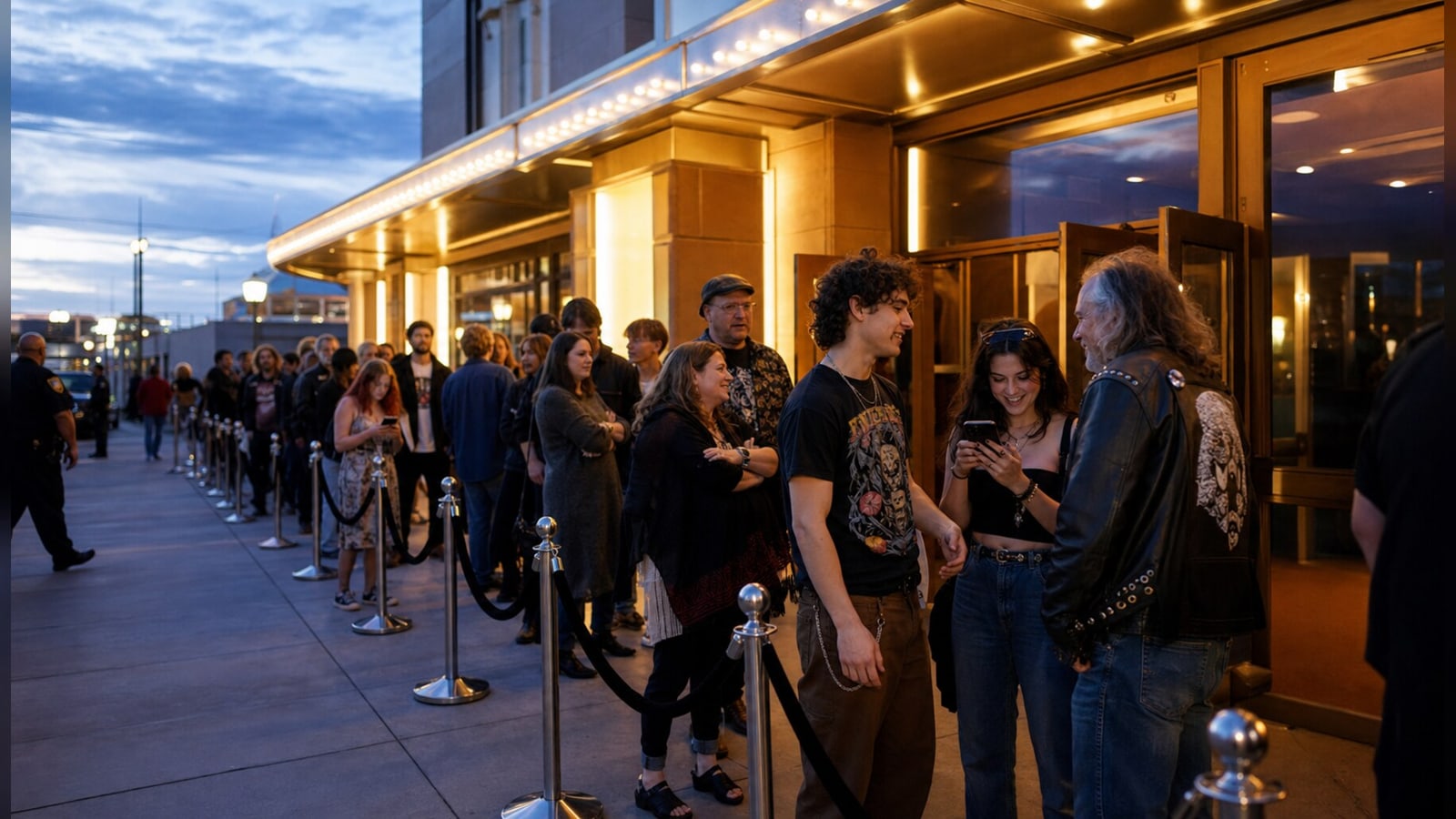
New data shows Gen Z is the fastest-growing audience for tribute bands in America, and they're driving a quiet structural shift in live-music programming.
No media, footage, audio, or performances by the original artists named in this article appear here. The acts referenced from the Music Zirconia and Premier Tributes rosters are independent tribute acts.
A trend the industry hasn't named yet
Walk into a Queen Nation show at a 1,500-seat performing arts center in 2026. Look at the audience. Then look again.
You will see, as expected, Gen Xers and Boomers who saw Queen live in 1980. You will also see, in numbers that have been climbing year over year for at least three seasons, 20-year-olds and 25-year-olds singing every word. They were not born when Bohemian Rhapsody was recorded. Many of them have never seen the surviving members of Queen perform live and never will. The tribute act is their Queen.
The same pattern is showing up at Back in Black (AC/DC) shows, Bee Gee Gold (Bee Gees), Britain's Finest (The Beatles), and Mamase (Michael Jackson). It is also showing up across the modern-artist tribute tier: 24K Magic (Bruno Mars), Swift Nation (Taylor Swift), Deja Dua (Dua Lipa), and Rihanna Replay (Rihanna).
Gen Z is now the fastest-growing audience segment for tribute bands in America, and the live-music industry has not yet fully priced the implications.
This article looks at the data behind the shift, why it is happening, and what venues, agencies, and tribute acts should do about it before the trend stops being quiet.
What the data actually says
Three numbers frame the shift:
1. Gen Z's share of concert attendance is climbing fast.
Gen Z grew 25% year over year to make up 28% of total U.S. concert attendance in 2024. Combined, Millennials and Gen Z (ages 18–34) now account for 62% of all U.S. concert attendees. (Source: Luminate live-music data)
2. Gen Z's relationship with older catalogs is structurally different from prior generations.
Industry research consistently finds that Gen Z listeners associate 1990s and earlier music with "comfort, escapism, and a sense of realness," and that nostalgia is shaping how Gen Z actively searches for new artists, including catalog discovery of artists who pre-date their birth. (Source: One2Watch 2026 Gen Z music discovery research)
3. Gen Z spends disproportionately on live experiences.
Gen Z music tourists put 45% of their travel budgets toward music experiences, the highest share of any generational cohort tracked. Live music is not a casual purchase for Gen Z. It is a primary spend category.
Why this is happening: three converging forces
1. Streaming made the entire catalog flat.
For Gen Z, the difference between a 2023 release and a 1973 release is one swipe. There is no "old music" versus "new music" the way prior generations experienced it. A 22-year-old discovering Don't Stop Me Now through a TikTok edit is the same kind of discovery as a 22-year-old in 1979 hearing Don't Stop Me Now on FM radio. The catalog is flat; the discovery is current.
2. The original is often unavailable.
For a Gen Z fan who falls in love with Queen's catalog, seeing Queen live is largely not on the table. The same is true for The Beatles, Michael Jackson, the original Eagles lineup, Prince, the original lineup of Pink Floyd, and a long list of others. The tribute show becomes the only live access point. That makes the tribute act, in functional terms, the live performance of the catalog for an entire generation.
3. The aesthetic is current.
Modern tribute acts, particularly the ones rising on the Premier Tributes and Music Zirconia rosters, are producing shows that are visually current, lighting-forward, and built for vertical-video capture. They look like the shows Gen Z grew up watching on a phone. That cultural fluency lowers the barrier between "this is a tribute to an artist my parents loved" and "this is a show I want to post."
What venues, agencies, and bands should do about it
For venues and talent buyers:
- Re-audit demographic assumptions. If your tribute programming is still being sold to a 50+ buyer profile only, you are pricing tickets, marketing channels, and beverage targeting for the wrong audience.
- Lean into modern-artist tributes alongside classics. Tributes to artists who are currently recording (Bruno Mars, Taylor Swift, Dua Lipa, Morgan Wallen, Rihanna) have a Gen Z audience baked in. Programming a mix of legacy tributes and current-artist tributes broadens the demographic in the room.
- Treat tribute nights as social-content events. Designated photo moments, vertical-video-friendly lighting, and post-show meet-and-greets dramatically expand the organic social reach of every show.
For agencies and tribute acts:
- Build the visual side of the act for the Gen Z audience, not the old assumptions. Vertical capture, lighting design, and reel-ready set moments are now competitive infrastructure, not nice-to-have.
- Recognize that the catalog is doing the work, while the show has to deliver the moment. Gen Z audiences came to experience the catalog they've already memorized. The job is to be present and to deliver, not to "introduce" the music.
- Cross-program legacy and modern tributes. A bill that pairs a 1970s tribute headliner with a 2020s tribute opener fills two demographic gaps at once.
For the broader live-music industry:
- The Gen Z tribute audience is not a passing trend. It is a structural feature of how the catalog now reaches the next generation, and it is accelerating at the same time the Heritage Act Pipeline Problem is removing the originals from the road.
Looking ahead
By 2028, three things will be true:
- The under-35 share of U.S. tribute-show attendance will be a majority at most venue categories, not the minority it was in 2020.
- Modern-artist tributes will be the fastest-growing genre subcategory in the tribute industry, accelerating ahead of classic rock for the first time.
- The tribute industry will be the primary live-performance access point to multiple generations of legacy catalog, and the agencies that recognized the demographic shift early will set the pricing and programming standard for the rest of the market.
The Gen Z tribute audience isn't quiet anymore. It just hasn't been named yet.
Sources & further reading
- How Gen Z Defies Live Music Audience Trends, Luminate
- How Gen Z Discovers Music: 2026 Industry Insights, Ones to Watch
- Festivals Drive Gen Z to Highest Concert Spend, Luminate
- Shifting Tribute Band Audiences, Pro Tribute Bands
- Music Zirconia roster · Premier Tributes roster
Tribute act disclosure
The tribute acts referenced in this article are independent acts represented by Music Zirconia. They are not affiliated with, endorsed by, or associated with the original artists, their record labels, management, or trademark holders. Artist names, song titles, and related marks remain the property of their respective owners and are used here only to identify the original artists whose work each tribute act performs.
Original artists referenced
Queen, AC/DC, Bee Gees, The Beatles, Michael Jackson, Bruno Mars, Taylor Swift, Dua Lipa, Rihanna, Pink Floyd, Prince, the Eagles, Morgan Wallen.
Looking for a featured acts feature for your event?
Tell our booking team what you need. One contact handles availability, quotes, and contracting, and comes back with a fast quote.
Request an act